Coastal Roots Farm: Non-Profit Community Farm
How a community farm became a platform for food, education, stewardship, and belonging.
PROJECT OVERVIEW
Coastal Roots Farm is a nonprofit Jewish community farm and education center located in Encinitas, California, cultivating healthy food, environmental stewardship, food justice, and community connection through regenerative agriculture.
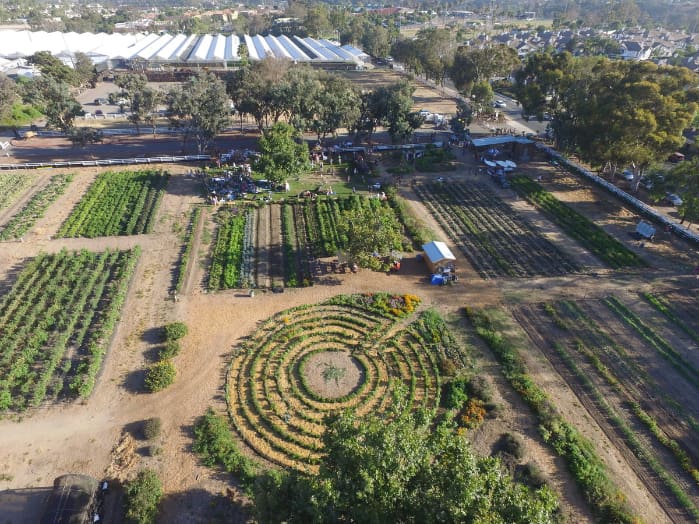
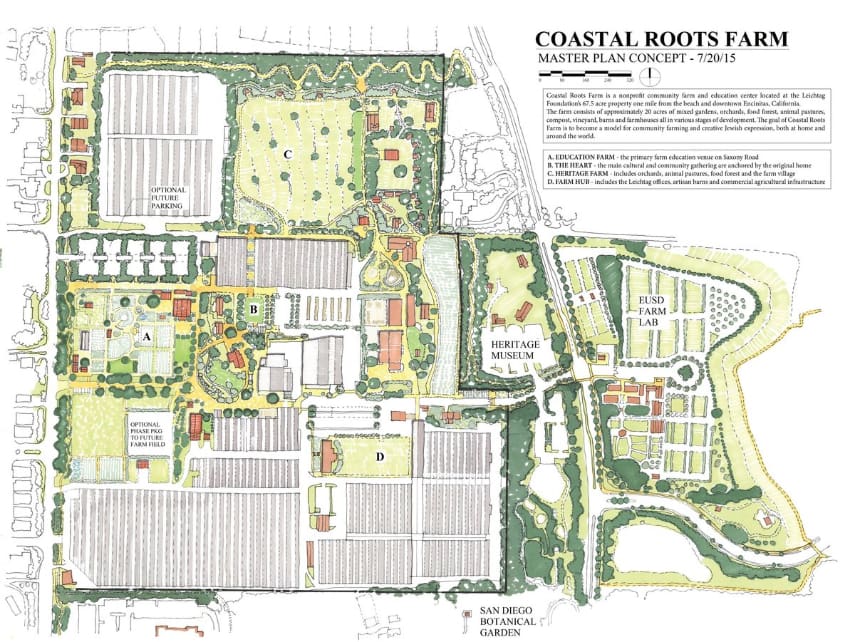
Situated on the 67-acre Leichtag Commons campus, the farm stewards 17 acres that include vegetable production fields, educational gardens, a food forest, chickens, compost systems, gathering spaces, and community programming. Rooted in Jewish agricultural traditions and open to people of all backgrounds, Coastal Roots Farm brings together food production, hands-on education, land stewardship, and inclusive community engagement.
Farmer D & Co helped guide the early vision, design, development, and launch of the farm and nonprofit organization, supporting the transformation of the site into a thriving community-centered agricultural landscape.
THE VISION
The vision for Coastal Roots Farm was to create more than a productive farm.
The goal was to build a place where farming, education, tradition, service, and community could come together. The farm needed to grow healthy food, teach people about the land, create meaningful gathering spaces, and reflect the values of stewardship, generosity, and connection.
At Leichtag Commons, agriculture became a way to activate the land and invite people into relationship with food, nature, one another, and a deeper sense of responsibility for the places that sustain us.
THE CHALLENGE
Starting a community farm requires more than a good site and a strong mission.
The project needed to translate a broad and inspiring idea into a working landscape, organizational structure, and long-term operating model. It had to balance food production, education, public access, community programming, Jewish agricultural values, ecological stewardship, and nonprofit management.
The challenge was to create a farm that could be both practical and meaningful — a place capable of producing food while also serving as a living classroom, gathering space, and community resource.
OUR APPROACH
Farmer D & Co helped lead the community visioning process, design and build the farm, and launch the nonprofit organization responsible for stewarding its long-term operations.
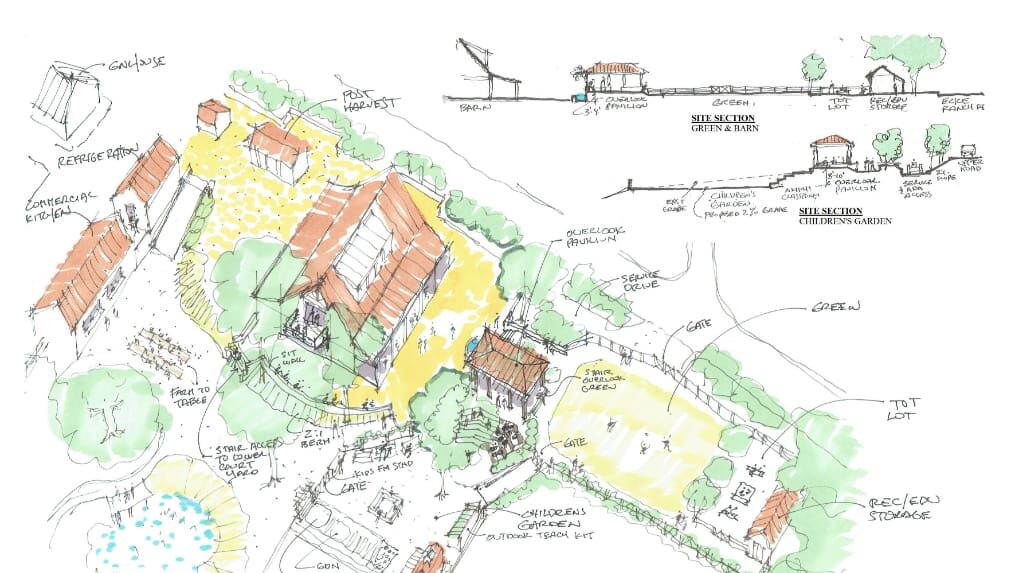
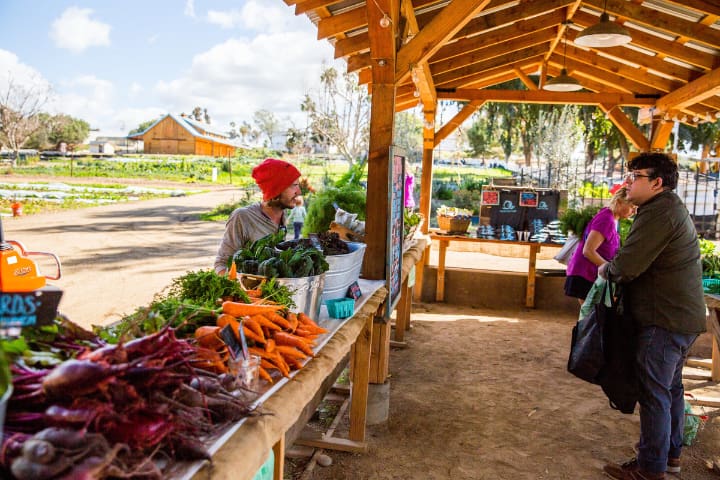
The work included planning and developing vegetable production areas, a food forest, educational gardens, compost systems, a pay-what-you-can farm stand, and spaces for gathering, learning, and community programming.
From the beginning, the farm was designed as a living system. Production, education, food access, and community engagement were not treated as separate parts of the project, but as interdependent elements of one larger vision.
THE OUTCOME
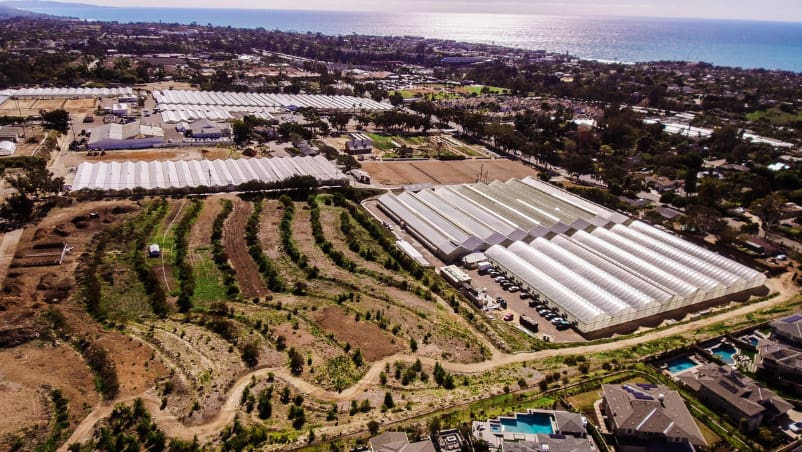
Today, Coastal Roots Farm operates as a thriving nonprofit serving the broader San Diego community through food access, education, regenerative agriculture, and connection to the land.
The farm’s programs now include a pay-what-you-can Farm Stand, nature play, field trips, farm tours, farm camps, volunteer opportunities, community gatherings, and farm-to-table events. Its work continues to demonstrate how a farm can support nourishment, learning, cultural connection, and a sense of belonging.
Recent impact reporting reflects the strength of that model, with tens of thousands of pounds of food grown annually, thousands of eggs produced, and significant organic material diverted through composting and regenerative land management practices.
PROJECT IMPACT
Coastal Roots Farm demonstrates how agriculture can become a platform for community benefit.
The farm supports local food access through its pay-what-you-can farm stand, creates hands-on learning opportunities for children and adults, and provides a physical place where people can gather around shared values of nourishment, care, and responsibility.
It also shows how mission-driven agriculture can help institutions activate land in ways that are productive, educational, ecological, and deeply human.
THAT THIS PROJECT TEACHES
Coastal Roots Farm offers several lessons for future community farm and land-based projects:
- A farm can be more than a place of production.
When designed with intention, a farm can become a classroom, gathering place, food access point, and community hub.
- Mission and operations must be developed together.
A strong vision needs physical design, organizational structure, programming, and operational systems to become sustainable over time.
- Community engagement should begin early.
The visioning process helped root the farm in the needs, values, and aspirations of the people it was intended to serve.
- Food can create belonging.
Growing, sharing, learning, and gathering around food helps build relationships between people, land, and community.
CLIENT TESTIMONIAL
“Farmer D played a crucially important, indispensable role in the start-up of Coastal Roots Farm and Leichtag Commons. As a thought leader and well-respected practitioner, he has defined best practice in community farming. His visionary contributions continue to have a sustaining and foundational impact.”
— Jim Farley, Executive Chair, Leichtag Foundation
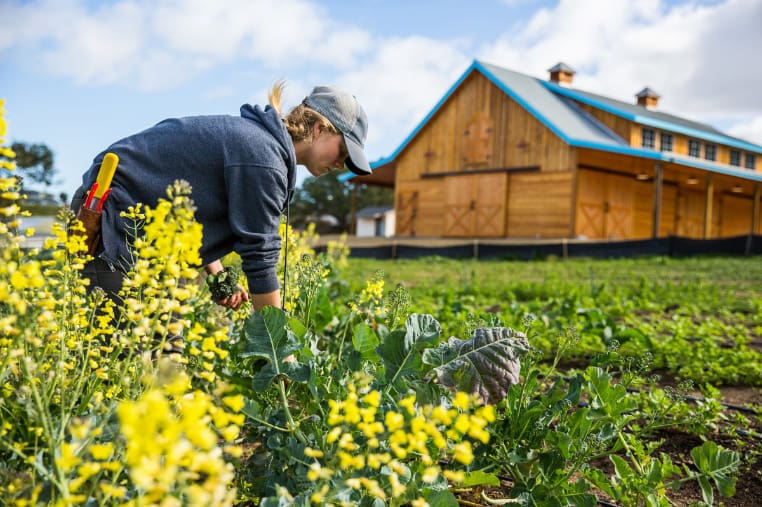
Coastal Roots Farm reflects a central belief behind Farmer D & Co’s work: healthy places begin when people are reconnected to land, food, and one another.
By bringing together regenerative agriculture, education, food access, and community life, the farm continues to demonstrate how land-based projects can serve both people and place for generations to come.
