7 Reasons to Add Agriculture to Your Community
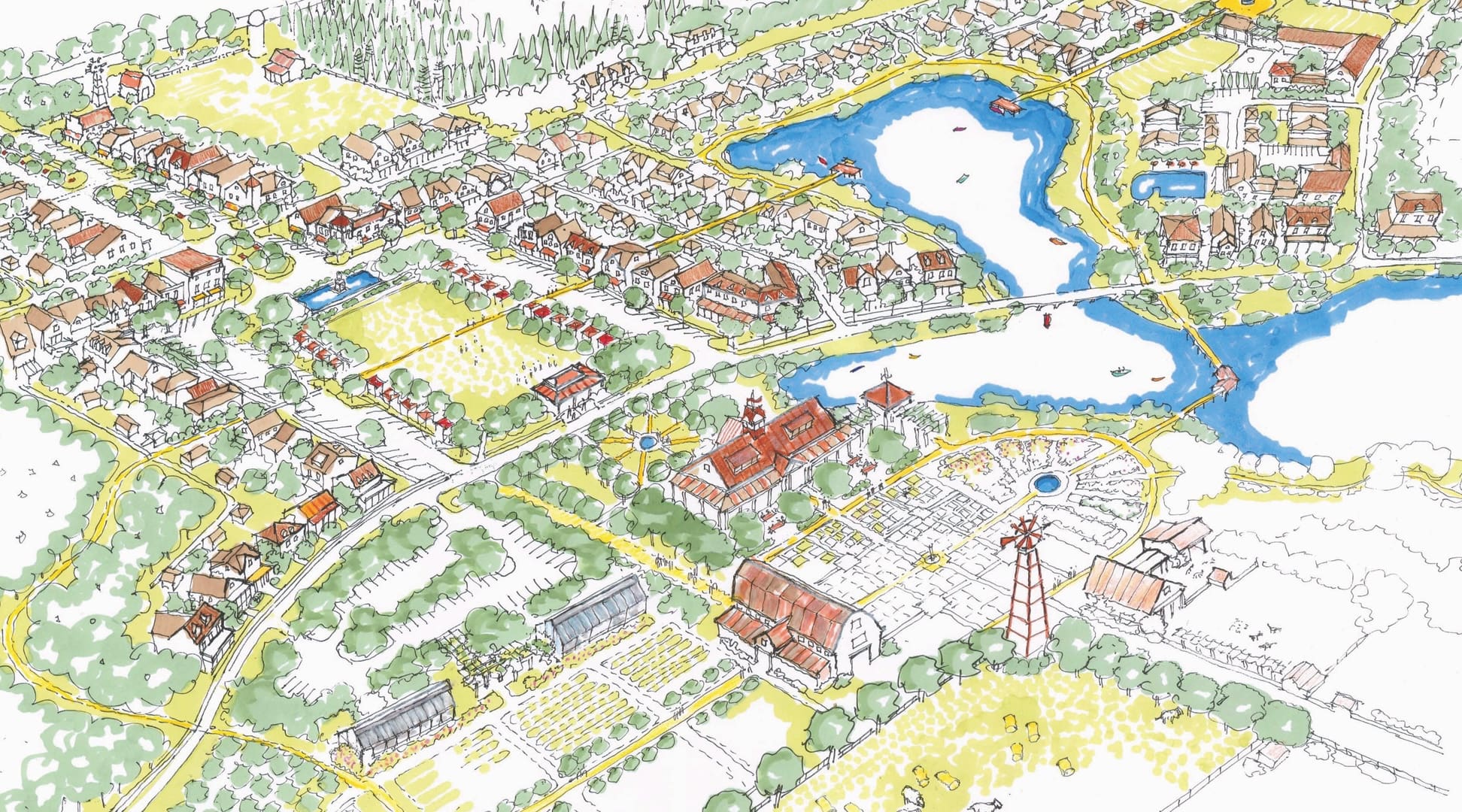
When thoughtfully integrated into communities, agriculture can support food production, social connection, education, land stewardship, and more vibrant regional food systems.
Farm-centered communities — from community farms and agrihoods to conservation villages, homesteads, and educational landscapes — offer a powerful alternative to conventional development. When planned well, agriculture can become more than an amenity. It can serve as social, ecological, educational, and economic infrastructure.
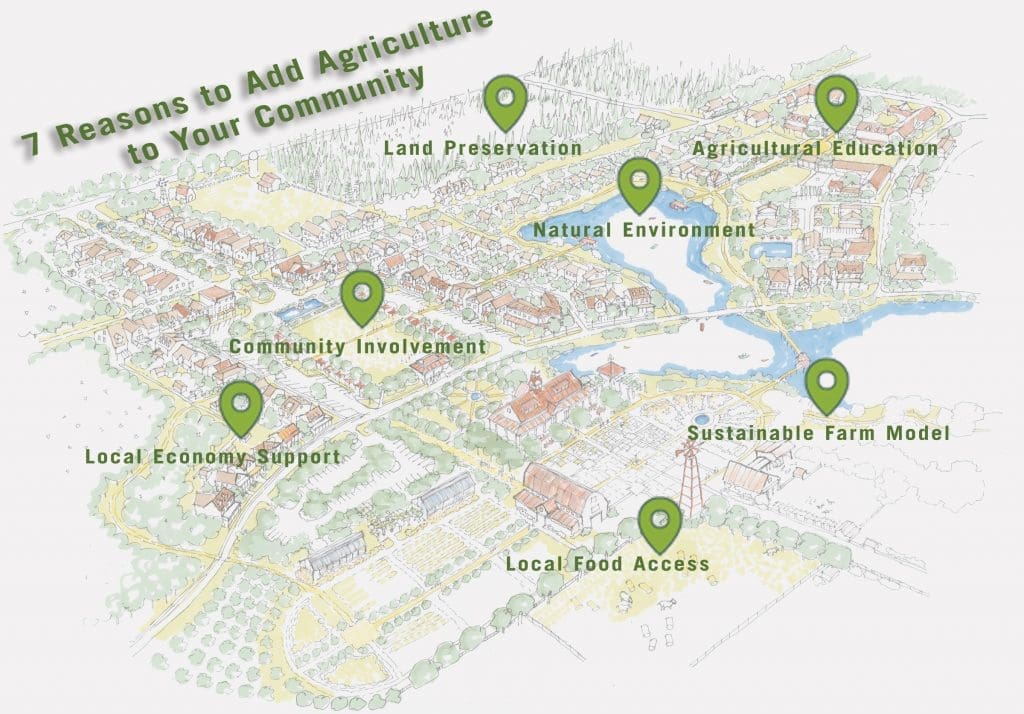
Here are seven reasons to add agriculture to your community.
01. Preserves Land for Agriculture
Communities have too often pushed agriculture away from the places where people live. As cities and towns grow, conventional development frequently displaces farms. This separates people from the land, food, and farmers that sustain them.
By integrating agriculture into community planning, we can create a different model — one where farms and gardens are not treated as land waiting to be developed, but as essential parts of healthy, resilient places.
Preserving farmland close to where people live creates daily opportunities for residents to connect with the land, understand where their food comes from, and build relationships with the farmers and stewards who care for it.
02. Creates a New Model for Farm-Centered Development
Adding agriculture to communities is not only about preserving land. It is also about creating places where food, housing, open space, ecology, and community life can support one another.
Instead of displacing farmland for development, farm-centered communities can use thoughtful planning, capital, infrastructure, and long-term stewardship to help working farms take root and thrive.
Agrihoods, conservation communities, and farm-centered neighborhoods can create a new economic model for agriculture by surrounding farms with people who value them, participate in them, and help sustain them over time. When done well, the farm becomes more than a backdrop. It becomes part of the community’s identity, rhythm, and shared life.
03. Increases Access to Healthy Local Food
Access to fresh, healthy, locally grown food is not evenly distributed. Many communities face barriers related to cost, transportation, land access, and lack of food and agricultural education.
Integrating agriculture into communities can help reduce some of those barriers. Community farms, farm stands, edible landscapes, shared gardens, and food donation programs can create more direct pathways between people and fresh food.
Not every resident will become a farmer or grow all of their own food, but when agriculture is nearby and visible, food becomes more tangible. People are more likely to understand seasonality, value local farms, participate in food systems, and make healthier choices for themselves and their families.
04. Encourages Community Involvement
Farms and gardens have a unique way of bringing people together. They create reasons for neighbors to gather, volunteer, learn, celebrate, and share food.
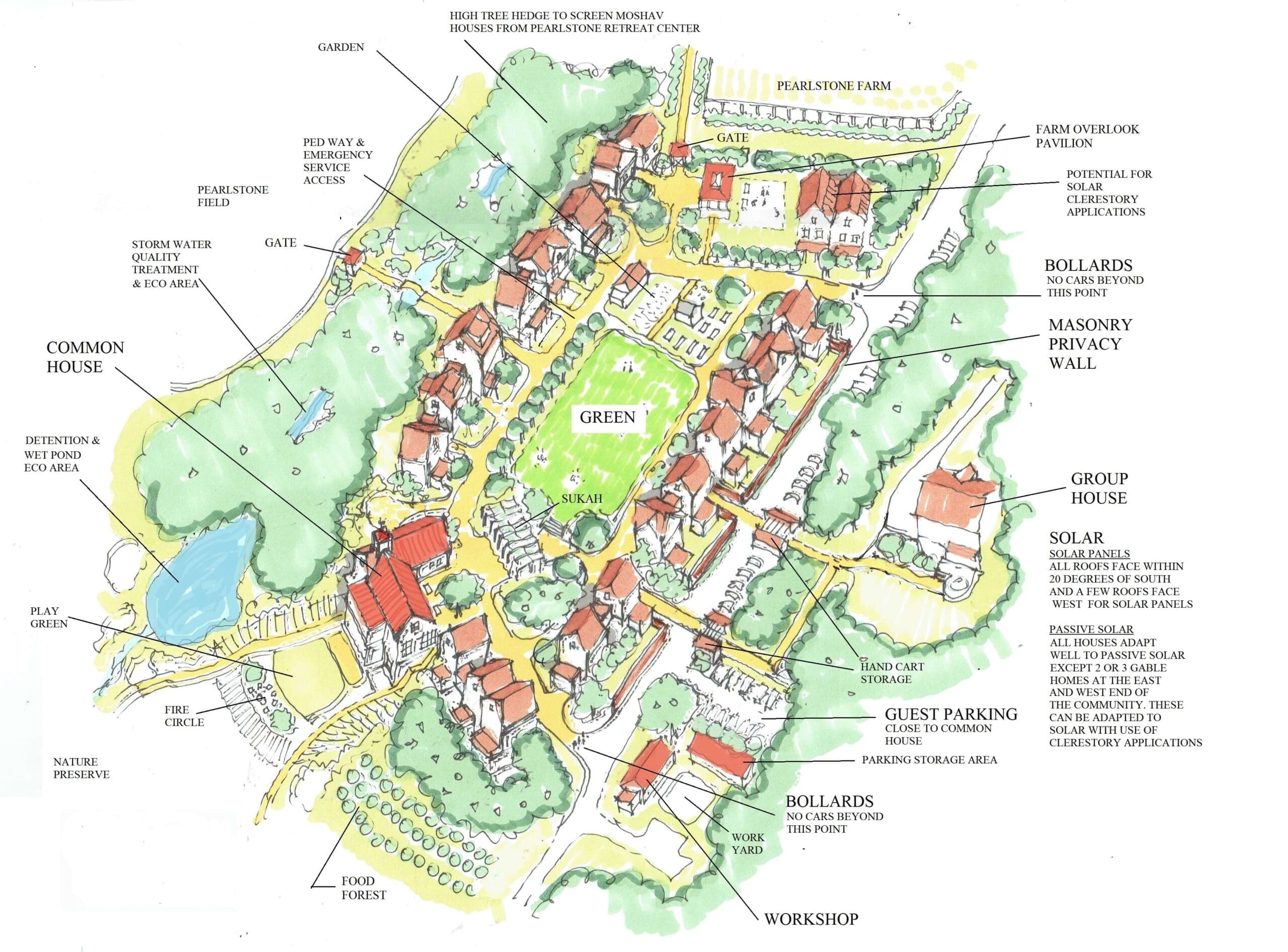
In farm-centered communities, agriculture can become a catalyst for social connection. Residents may meet one another while working in a garden, picking up produce, attending a farm dinner, walking trails, volunteering with their children, or participating in seasonal celebrations.
These communities demonstrate how a working farm can become part of the social fabric of a place. The farm is not only where food is grown. It is where relationships are formed, meals are shared, and people build a deeper connection to land, food, farmers, and one another.
05. Promotes Agricultural Education
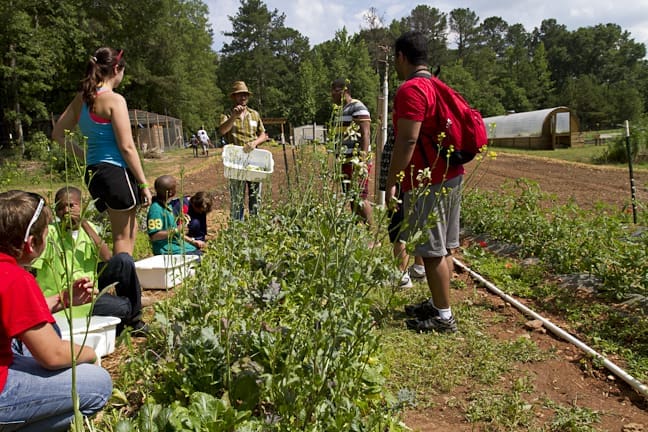
Agriculture creates a living classroom. When communities integrate farms and gardens, they create hands-on learning opportunities for children, adults, families, and visitors. People can learn about food production, soil health, ecology, nutrition, composting, pollinators, water, and land stewardship.
As “Citizen Farmers,” residents and community members can learn how to give back to the land more than they take from it. Agricultural education can be integrated into schools, camps, workshops, volunteer programs, community events, and farmer training opportunities.
These experiences help cultivate a new generation of land stewards — people who understand that healthy soil, healthy food, healthy communities, and healthy ecosystems are deeply connected.
06. Supports Local Economy
Local farms help keep food dollars circulating within the local economy. They can support farmers, food entrepreneurs, restaurants, educators, makers, and small businesses.
Community farms can also become platforms for related enterprises and services, including farm stands, value-added food products, garden education, farm-based events, workshops, culinary programming, and landscape or garden management.
When a farm is integrated into a community, it can create new relationships between growers, chefs, residents, schools, markets, and local businesses. A farm may supply a neighborhood restaurant, host a seasonal market, support a food access program, or inspire new products and experiences rooted in place.
In this way, agriculture becomes both a source of nourishment and a generator of local economic activity.
07. Benefits the Natural Environment
Agriculture can do more than reduce harm. When practiced thoughtfully, it can help restore ecological health.
Regenerative and organic farming practices can build soil fertility, increase biodiversity, support pollinators, reduce erosion, improve water cycles, and create habitat. Farms and gardens can also help people understand the natural systems that sustain them.
Adding agriculture to a community can support the environment in several important ways:
- Local food production can reduce the distance food travels from farm to table.
- Composting and local food systems can help reduce waste.
- Cover crops, compost, perennial plantings, and well-managed animals can help build healthier soil.
- Productive landscapes can increase biodiversity and create habitat for pollinators and beneficial insects.
- Educational programs can deepen environmental awareness and inspire better stewardship.
When agriculture is visible and accessible, people begin to see themselves as part of a living system. They become more aware of soil, water, food, waste, weather, habitat, and the daily choices that shape the health of a place.
Giving Back to the Land
At the heart of all seven reasons is a simple idea: our communities should give back to the land as much as they take from it — and ideally, even more.
We may own land on paper, but in a deeper sense, we are temporary stewards. We have a responsibility to care for the soil, water, biodiversity, beauty, and abundance that future generations will inherit.
Adding agriculture to communities is one way to practice that responsibility. It reconnects people to food, farmers, ecology, and one another. It helps transform development from an act of consumption into an opportunity for regeneration.
When we thoughtfully weave farms and gardens into the places we live, work, learn, and gather, they can help create healthier people, stronger communities, and more resilient landscapes for generations to come.
